Adapting to Life’s Obstacles: How to Thrive with a Positive Mindset

From the beginning of evolution of life on this planet if there was one thing which remained consistent, it was the challenges it brought to the group that was trying to survive and thrive.

If you are someone who believes (or does not) in the Darwinian theory of evolution, you will know how the evolution came about and how human beings ended up here. The mechanism that Darwin proposed for evolution is natural selection “Because resources are limited in nature, organisms with heritable traits that favour survival and reproduction will tend to leave more offspring than their peers, causing the traits to increase in frequency over generations

Something that was felt by and survived by all the organisms who thrived were the same challenges that their environment and the conditions threw at them. And on the other hand, the one’s which did not survive also had to face the same exact challenges but could not handle them well or overcome them.

The bad news is, we will also face challenges (if not already, which I highly doubt) as our ancestors did, and so would our future generations without any exceptions regardless of we liking it or not. But the good news is, we can overcome it and we have what it takes to adapt, survive and thrive. Let’s find out how!

Challenges can be broadly split into 2 types –
Internal – Mental
External – Physical

While most of the external challenges we face every day, every minute in our lives are external but how we react to them is based on our mental state and how we deal with them. It is that mental state that decides if we will survive, thrive or perish.

With ever increasing challenges in the world, it becomes harder for an individual to get back to his normal state as soon as it is ideal to do so. The connected world keeps throwing things at him to keep him in that negative zone forever, if he does not become aware of where it is leading him and takes charge of the situation.
Take any social media for instance, you constantly are bombarded with all the so called “great” things people are able to achieve and do in their jobs, life, family. And looking at all that you start to feel that you are not “there” yet and start questioning your abilities and life.

The challenge arise when you as an individual are already facing inner turmoil. Human mind has unimaginable potential to imagine whatever it wants to but is limited to its experiences, environment and situation at the time.
For instance, in his famous book “Man’s search for Meaning” Viktor Frankl writes “when someone becomes unemployed, they often suffer from their provisional existence, a deviation from the more well-defined path of an employed individual. This provisional existence can change one’s relationship to time, making days feel longer and filled with less meaning than the busy days of employment

“Everything can be taken from a man but one thing: the last of the human freedoms—to choose one’s attitude in any given set of circumstances, to choose one’s own way.” Viktor E. Frankl

Percentage of adults in select countries worldwide currently experiencing mental health conditions (e.g. depression, anxiety) as of 2022Statista

“You have power over your mind – not outside events. Realize this, and you will find strength.” Marcus Aurelius

Our mental state is the ultimate decider. External factors such as financial instability, issues in our relationships, uncertainty in our careers, issues with our physical wellbeing or issues with the environment we live in, no matter what the situation is, it is our mental state that determines if those issues break us or we make them the building blocks of our strong characters.

Creating a strong mindset requires lot of practice and usually years of intentional work on it. Just like to maintain peak physical state one has to consistently put in the hard work at the gym.

It is easier said than done though!

And it is not all gloomy!

The good news is, as individuals we can keep trying to be better. We can try to be better professionals, we can try to be better parents, better spouses, better friends or better children and eventually we will be better than where we are currently at in whichever area we wish to get better in, and that’s a surety but…

It will take immense courage, courage to take the responsibility and own the situation we are in.
It will take immense planning, plan to get to where we want to get to.
It will take immense discipline, discipline to follow the plan we made for ourselves.
It will take immense adaptability, adapting to ever changing world and finally
It will take immense patience, patience to continue until you get what you want.

To make sure that this is just not another motivational rant you are reading and give you the the best ROI on your time, let me lay out 3 simple strategies (the ABC’s) to help you get started,
1. Acknowledge – Take a good hard look at yourself and come to terms with who you really are. Be true to yourself and acknowledge. You could be a good person or a monster, You could be a great communicator or a terrible one or you could be a great singer or may be its just a hobby. No matter what you conclude, make sure your are brutally honest with yourself.
2. Believe – Believe in whatever you concluded with in the previous step but also believe that you have taken the first step towards change already and now its going to get easier. Start by going back to your experiences and observe what you are good at, or even decent at. Let’s say you wanted to become a public speaker but are always shy to speak in front of large groups, you also realised that though you are shy, you have spoken in front of a group in the past and have received good or even bad feedback. The point you must focus on is, when you spoke, people listened and that’s why they were able to give you feedback. This should give you enough courage and belief to take up public speaking seriously.
3. Change – Change accordingly! Change your strategy if you have to, change your habits if you have to, change your environment if you have. The objective should be to adapt to the situation and change your response to it. If your objective is to become a good musician and you are already past your 50’s, you still can change your situation and become a good musician. Without changing your mindset or response or habits you will not be able to accomplish your objective. Take it from me in writing!

To sum it all, I will close this blog with C. W. Longenecker’s “The Victor”

If you think you are beaten, you are.
If you think you dare not, you don’t.
If you like to win but think you can’t,
It’s almost a cinch you won’t.
If you think you’ll lose, you’re lost.
For out in the world we find
Success begins with a fellow’s will.
It’s all in the state of mind

If you think you are out classed, you are.
You’ve got to think high to rise.
You’ve got to be sure of your-self before
You can ever win the prize.
Life’s battles don’t always go
To the stronger or faster man.
But sooner or later, the man who wins
Is the man who thinks he can.


Be Great!
Praveen.


Lessons from Ratan Tata: Respected, Liked and Admired.

Lately, I am seeing a lot of posts, articles and videos on how being a “Respected” leader is more important than being a “Liked” one. After enough introspection on the topic, I believe at it’s core, Leadership isn’t just about being respected or liked, it’s about influence, impact, and how people perceive and respond to you. While some leaders are respected, others are liked, a few are admired, but the truly great ones manage to balance all three and it is imperative to strive for all three if you want better teams, organisations or even society in general.

So, what does it take to be a leader who is not only respected but also liked and admired?

While thinking of someone in my fresh memory who displayed all these virtues, I thought of Ratan Tata sir instantly. Having read his biography recently by Thomas Mathew and really looking beyond the media news, I was able to understand him as a person, as a Human.

This article is a summary of lessons I’ve learned in his biography (and in some parts some of the articles available online) on what makes a great leader.

Respected: The Foundation of Leadership

Respect is earned through competence, integrity, and consistency. A respected leader is someone who:

• Leads by example – They don’t just give orders; they embody the values and work ethic they expect from their team.

• Demonstrates expertise – People trust their decisions because they have the knowledge and experience to back them up.

• Holds themselves accountable – They take responsibility for mistakes and ensure fairness in their leadership.

Without respect, a leader’s authority is weak. People may follow them out of obligation but not out of genuine belief in their leadership.

One such vision was brought to life with Tata’s purchase of Land Rover and Jaguar automobiles and bringing it under the TATA umbrella.

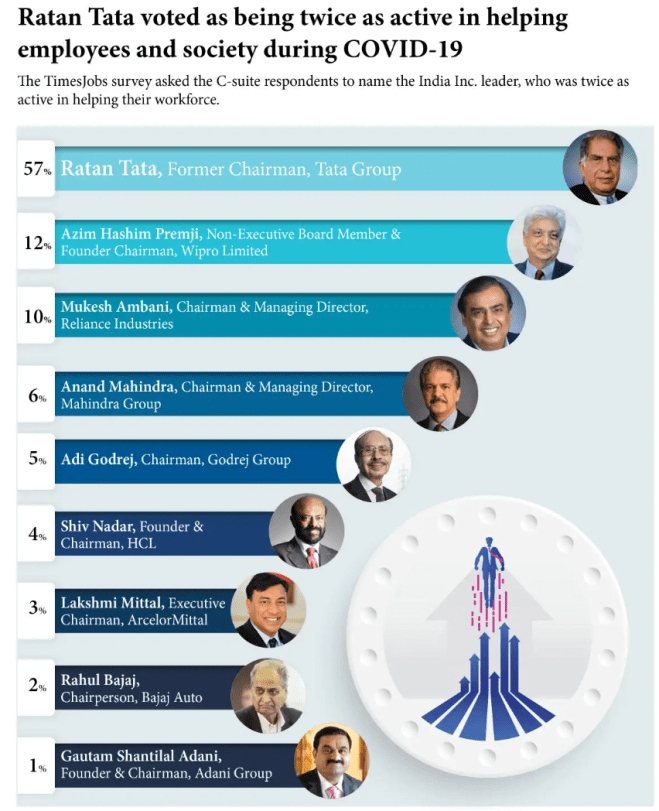
Ratan Tata was (still is) respected for his visionary approach and commitment to ethical business practices. His strategic leadership transformed the Tata Group into a global conglomerate while setting high standards in transparency and corporate governance. His consistent, principled decision-making has earned the trust of stakeholders and industry peers alike.

Liked: The Human Connection

Being liked as a leader doesn’t mean being a pushover or prioritizing popularity over purpose. It means fostering genuine relationships and a positive work environment. A likable leader:

• Listens actively – They make people feel heard and valued.

• Shows empathy – They understand their team’s challenges and support them.

• Encourages a positive culture – They create an atmosphere where people feel comfortable, motivated, and inspired.

Likability helps leaders connect with their team on a personal level, making collaboration smoother and fostering loyalty.


Ratan Tata consistently demonstrated humility, empathy, and integrity in his actions. He listened to others, treated everyone with respect, and placed a strong emphasis on ethical business practices. His down-to-earth nature and commitment to social causes through initiatives like Tata Trusts have helped create a genuine connection with employees, customers, and broader communities alike.

“If you want to walk fast, walk alone. But if you want to walk far, walk together.” Ratan Tata

Admired: The Mark of Inspiration

Admiration goes beyond respect and likability, it’s about inspiring people to be better. A leader who is admired:

• Has a strong vision – They articulate a compelling future and rally people toward it.

• Overcomes challenges with grace – They navigate difficulties with resilience and determination.

• Makes a lasting impact – Their leadership creates meaningful change, whether in their organisation, industry or society.

When people admire a leader, they don’t just follow orders, they believe in the mission and strive to emulate their leader’s qualities.

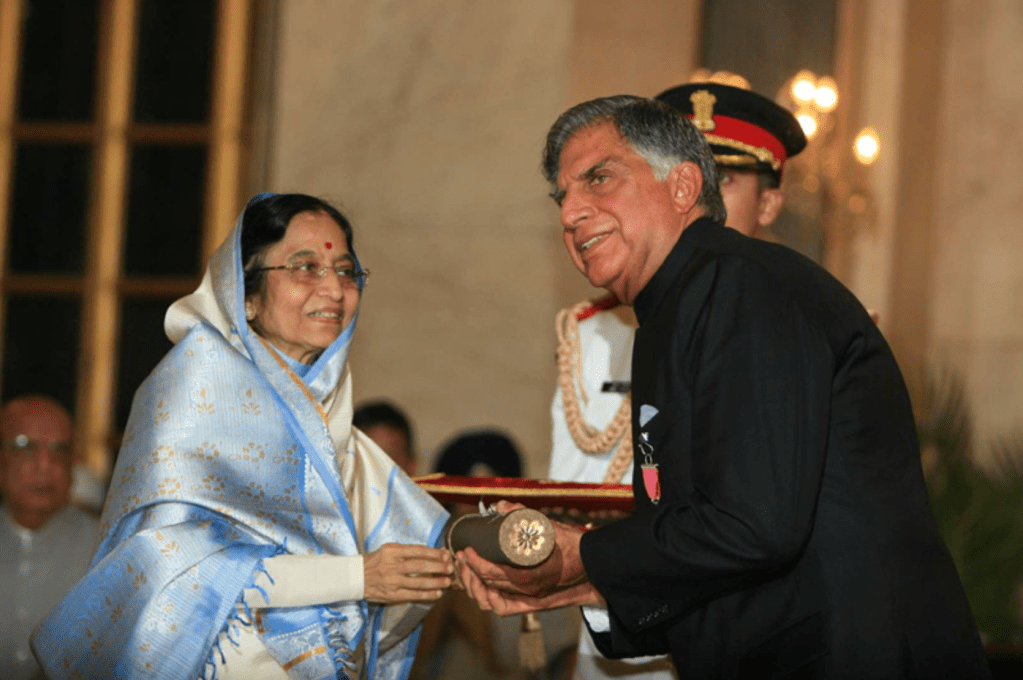
Padma Vibhushan (2008): The country’s second-highest civilian honor, awarded for his exceptional service in advancing Indian industry and philanthropy

Striking the Right Balance

Not all leaders manage to achieve all three. Some are respected but not liked, leading to a culture of compliance rather than enthusiasm. Others are liked but not respected, which can lead to inefficiency. True leadership requires a balance, earning respect through competence, being liked through genuine connection, and inspiring admiration through vision and impact.

Start by leading with integrity, building authentic relationships, and strive to leave a lasting positive impact. Leadership isn’t about power or doing just the so called “right” things. It is about the people you influence and inspire in the process.

Leading with Compassion

Compassion is “The feeling or emotion, when a person is moved by the suffering or distress of another, and by the desire to relieve it” While being compassionate in every role (Personal and Professional) is important, we’ll talk about why it is vital to be compassionate in leadership.

Leaders today spend a lot of time to learn and enhance their leadership abilities. There are numerous workshops which help in improving some of the traits to have in leadership and a lot of time is spent in understanding what makes a good leader. If there is one trait in leadership which I think is, of utmost importance is being compassionate.

Being compassionate simply means you are so dedicated to your team members or your tribe, that you can not see them in stress, in pain, in confusion, in despair and that means, you not only listen to them, you not only understand what they are going through but you also, try to help them to overcome that moment of pain, overcome that despair, overcome that confusion with all your experience and all your heart.

“People think compassion is a soft skill.  The strongest people I know are the most compassionate.  True compassion requires superhuman strength.” Jeff Weiner

There could be challenges for you as a leader to know what that thin line is, where you don’t get too involved in someone’s personal affairs and this is understandable. But what if, there are few questions which you ask yourself whenever you get stuck in something and use the same questions to seek clarity on what your team member is going through. Questions like, what happened, how serious is this problem, how did we get to this stage and what can we possibly do overcome this adversity and now, we translate to your team members situation to get the same clarity from him or her. There is one basic and the most important question you have to ask your team member before you ask the other questions though, which is, “How can I help? ” There could be different versions of this question such as, is there anything I can help you with, What can I do to help you with this, let me know if there is anything I can do to help you in this situation. The intention of this question should be to get their approval to get involved and be of any help to them.

For instance, you see a team member not being able to come to work for 2 or 3 days in a row and you have not heard from him apart from his leave request without the context. On one hand you gave him his right to be off work when he needed to, without asking him any question, but you feel something’s wrong and it is out of his nature to be away for long periods without giving the context. A good way to make sure that he and everything concerning him is OK, you can leave him a text to call you whenever he can. Once he calls you, you ask him how he is doing and build the conversation. If at any moment, you feel something is not OK and he has told what exactly is happening, you ask him “Can I be of any help to you in this situation?” and if he wants your help, he might not say a yes, but he will probably start giving you the details of the situation and then you can try to help him out. And if the answer for the same question is something like, I’ve got this, or I have it in control. You should respect that and let him handle the situation. However, you will still let him know that he can always reach out to you if he ever needs you and assure him that you will take care of his work responsibilities until he is back and he does not have to worry about it. By doing this, you still were able to be of some help to him.

Leaders should not think of being compassionate only for challenging or adverse situation the team member is in, but for good times too. For you to be able to truly celebrate your team members achievements, you have to feel what the team member feels and also help him in celebrating the good time. Yes, we do have recognition and awards in place in every organisation to make people feel special for their accomplishments, but being truly compassionate would mean, you take active participation in someone’s accomplishments with all your heart, just like how you feel when you accomplish something.

“Compassion hurts. When you feel connected to everything, you also feel responsible for everything. And you cannot turn away. Your destiny is bound with the destinies of others. You must either learn to carry the Universe or be crushed by it. You must grow strong enough to love the world, yet empty enough to sit down at the same table with its worst horrors.” Andrew Boyd, Daily Afflictions: The Agony of Being Connected to Everything in the Universe

Being compassionate has some disadvantages too, because you truly are involved at emotional level. However, this is the price you have agreed to pay by being a leader. When you stack the disadvantages against being compassionate, you will see that the advantages are way more than the disadvantages. You will see the real value in being a leader, you will see what difference it makes not only for an individual team member but to the entire team and the organisation. Because the positive changes you’ll see around you, will be contagious and will spread to make a positive work place for everyone in the organisation. A team, an organisation where everyone trusts each other, where everyone has each others back and where everyone celebrates each others accomplishments like their own.