Good Strategy, Bad Strategy: The Difference That Decides Success

When I was around seven or eight, there was a retailer who was in his early twenties and owned a electronic equipments store. Due due family disputes, he had just parted ways with his older brother who was in the same business for more than a decade . When he started his own store, he was young, had no idea of building a business and all he knew was, how the connections worked on a circuit board. Everyone in our neighbourhood thought he will not survive for more than a year or two without his older brother’s support and eventually he’ll go back to his brother.

However after a few months, his business started to grow. From just fixing things, he started to sell electronic products in his store and after few more months he became a major distributor of some of the products such as tubelights, bulbs, fans, geysers and many more and after a few years he started to take huge contracts from some of the real estate builders in an around our neighbourhood and fifteen years later, he became a major player in south Bangalore electronic equipments sales and had a annual revenue of more than sixty crore Rupees. Whereas his older brother, who had started around a decade earlier had wound up his shop and returned to his hometown.

The reason I remembered Ram Nivas (his real name) for this blog is because whenever I thought about him and his brother, I thought Ram was maybe more passionate, better with people, had better business acumen. But something I have realised after so many years that actually was the reason for this great trajectory is, Ram was better strategically. When he started his own business, he chose a neighbourhood which was growing and still developing. He chose the area where he saw a lot of vacant land and he knew there will be a lot of construction happening soon, which would mean that there will be a lot of demand for his services.

Richard Rumelt (considered as one of the best thinkers on the topic) in his book, Good Strategy/Bad Strategy writes, The first step of making strategy real is figuring out the big ‘aha’ to gain sustainable competitive advantage—in other words, a significant, meaningful insight about how to win.
And that “aha” moment for Ram was to rent a shop in the area where there was hardly anything at that moment but will soon start developing.

In today’s world, most of the organisations have made it a sort of mandate to have a vision and a mission for themselves which is important too, but the problem arises when the organisation and its managers confuse strategy to having a fancy vision and mission statements. A good strategy simply put is, Coherent set of actions designed to achieve a specific goal by leveraging strengths and tackling critical challenges. And a bad one is, Fluffy statements, wishful thinking, vague goals, or long lists of unconnected initiatives.

A good strategy has 3 components,

  • Coherent Actions – A sequence of moves that align.
  • Diagnosis – Identify the real challenge.
  • Guiding Policy – A chosen approach to tackle it.

If organisation A’s mission is to become the market leader (based on customer count) at delivering personalised gifts,
Coherent Actions – Every action of every employee of that organisation should be focused towards accomplishing that task. It would mean every effort, every project, every KPI of that organisation and its employees should be aligned towards achieving that objective.
Diagnosis – Organisation A has to figure out where it is leaking money or loosing its prospects. Could it be, the cost of its products, the quality or maybe their marketing team is not able to market the products appropriately.
Guiding Policy – It has to know the market trends and what the market demands are. Could it be something that the prospects follow on social media, a viral TV series or a song. In simpler terms, constantly doing market research and being on top of any recent trends.

A case study that peaked my interest and inspired me to share the learnings with you all is from the book I mentioned earlier, Richard Rumelt’s “Good Strategy/Bad Strategy” where he breaks down and explains Sam Walton’s strategy with Walmart,

In the 1960s, most big retailers focused on cities and large suburbs, believing rural towns lacked the population to sustain profitable stores. Walton spotted a different truth: these communities were underserved yet had the same appetite for low prices and quality products as city shoppers. The real challenge wasn’t demand—it was figuring out how to serve these customers efficiently at scale.

Instead of chasing urban markets like its competitors Sears or Kmart, Walton committed to small-town dominance. His strategic mantra was Everyday Low Prices (EDLP), not periodic big sales. This single-minded focus meant every operational decision had to align with cost leadership and accessibility.

Walton’s success didn’t come from ambition alone; it came from coordinated, tangible steps that reinforced his guiding policy:

  • Opened stores in clusters around distribution centres to minimise transport costs.
  • Built a centralised logistics system rather than relying on wholesalers.
  • Used computer inventory systems and satellite communications before competitors caught on.
  • Fostered a “save money for the customer” mindset across all employees

Good strategy almost always looks this simple and obvious, discovering the critical factors in a situation and designing a way of coordinating and focusing actions to deal with them. Walton didn’t just dream about being the biggest retailer, he designed a system to make it inevitable.

“A good strategy includes a set of coherent actions. It is about action, about doing something.”

From a single rural store, this clarity of purpose and alignment of execution propelled Walmart into a global retail leader it is today.

“At the core, strategy is about focus, and most complex organizations don’t focus their resources. Instead, they pursue multiple goals at once, not concentrating enough resources to achieve a breakthrough in any of them.” Richard P. Rumelt, Good Strategy Bad Strategy

Now the exact opposite case, a “bad strategy” is of Big Bazaar losing the plot in Indian retail

Once the crown jewel of Future Group, Big Bazaar was India’s answer to Walmart in the early 2000s. It blended the feel of an Indian marketplace with the scale of a supermarket, quickly becoming a household name. But by the late 2010s, cracks in its strategy became too deep to fix—culminating in a collapse accelerated by debt, competition, and the pandemic.

  • E-commerce and organised competitors like Reliance Retail and DMart were building ultra-efficient, low-cost supply chains.
  • Customers were moving towards either high-discount formats (DMart) or convenience-focused online shopping (Amazon, Flipkart, JioMart).
  • Instead of recognizing operational inefficiency and pricing uncompetitiveness as the core problems, Big Bazaar doubled down on store expansion, assuming brand familiarity would keep footfall strong.

Big Bazaar tried to be all things to all customers – discount store, fashion destination, grocery bazaar, electronics seller – without achieving excellence in any one area.

As Rumelt warns:

“When you fail to choose, you try to accommodate conflicting demands and end up with a muddle.”

Big Bazaar’s actions often contradicted each other:

  • Excessive Diversification – Launched sub-brands like FBB (fashion), Food Bazaar (grocery), and eZone (electronics) without building scale advantage in any category.
  • Operational Inefficiencies – Complex supply chains, high rental costs, and poor inventory management meant they couldn’t compete on price with DMart.
  • Delayed Digital Pivot – Launched online initiatives too late, and they lacked integration with store operations.
  • Debt-Fueled Expansion – Opened large-format stores in expensive locations without ensuring profitability.

The Inevitable Downfall :

By the late 2010s:

  • DMart offered lower prices.
  • Amazon/Flipkart offered unmatched convenience.
  • Reliance Retail aggressively captured urban and semi-urban markets.
    Big Bazaar was stuck in the middle, with neither the cheapest prices nor the best experience.
  • The debt burden worsened, COVID-19 slashed footfalls, and in 2022, the brand’s assets were acquired by Reliance Industries.

Bad strategy is long on ambition and short on focus. Big Bazaar wanted to be everywhere for everyone, but ended up being nowhere for anyone.

To Summarise,

A good strategy is a clear, focused plan that identifies the real challenge, sets a guiding policy, and drives a set of coherent actions to overcome it. A bad strategy is vague, full of ambition without focus, ignores key problems, and scatters effort across unaligned initiatives.
In business, success comes from diagnosing the real issues, making deliberate choices, and aligning every action to reinforce those choices, turning intent into impactful results.

PS – If you are wondering what Ram Nivas is upto these days, he has moved on to become a major property builder, owns several rental properties and lives a content life with his wife and 2 daughters.

Be Great!
Praveen.

Lessons from Ratan Tata: Respected, Liked and Admired.

Lately, I am seeing a lot of posts, articles and videos on how being a “Respected” leader is more important than being a “Liked” one. After enough introspection on the topic, I believe at it’s core, Leadership isn’t just about being respected or liked, it’s about influence, impact, and how people perceive and respond to you. While some leaders are respected, others are liked, a few are admired, but the truly great ones manage to balance all three and it is imperative to strive for all three if you want better teams, organisations or even society in general.

So, what does it take to be a leader who is not only respected but also liked and admired?

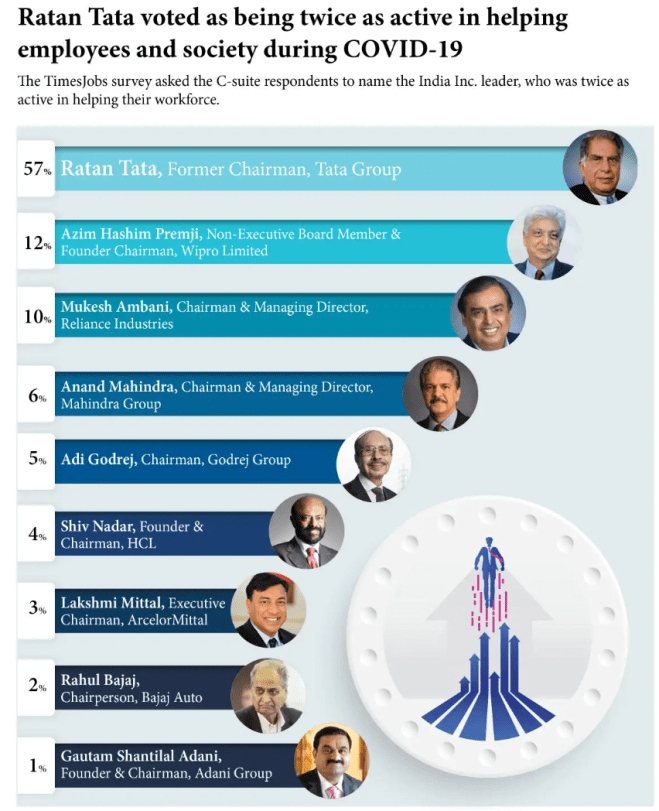
While thinking of someone in my fresh memory who displayed all these virtues, I thought of Ratan Tata sir instantly. Having read his biography recently by Thomas Mathew and really looking beyond the media news, I was able to understand him as a person, as a Human.

This article is a summary of lessons I’ve learned in his biography (and in some parts some of the articles available online) on what makes a great leader.

Respected: The Foundation of Leadership

Respect is earned through competence, integrity, and consistency. A respected leader is someone who:

• Leads by example – They don’t just give orders; they embody the values and work ethic they expect from their team.

• Demonstrates expertise – People trust their decisions because they have the knowledge and experience to back them up.

• Holds themselves accountable – They take responsibility for mistakes and ensure fairness in their leadership.

Without respect, a leader’s authority is weak. People may follow them out of obligation but not out of genuine belief in their leadership.

One such vision was brought to life with Tata’s purchase of Land Rover and Jaguar automobiles and bringing it under the TATA umbrella.

Ratan Tata was (still is) respected for his visionary approach and commitment to ethical business practices. His strategic leadership transformed the Tata Group into a global conglomerate while setting high standards in transparency and corporate governance. His consistent, principled decision-making has earned the trust of stakeholders and industry peers alike.

Liked: The Human Connection

Being liked as a leader doesn’t mean being a pushover or prioritizing popularity over purpose. It means fostering genuine relationships and a positive work environment. A likable leader:

• Listens actively – They make people feel heard and valued.

• Shows empathy – They understand their team’s challenges and support them.

• Encourages a positive culture – They create an atmosphere where people feel comfortable, motivated, and inspired.

Likability helps leaders connect with their team on a personal level, making collaboration smoother and fostering loyalty.


Ratan Tata consistently demonstrated humility, empathy, and integrity in his actions. He listened to others, treated everyone with respect, and placed a strong emphasis on ethical business practices. His down-to-earth nature and commitment to social causes through initiatives like Tata Trusts have helped create a genuine connection with employees, customers, and broader communities alike.

“If you want to walk fast, walk alone. But if you want to walk far, walk together.” Ratan Tata

Admired: The Mark of Inspiration

Admiration goes beyond respect and likability, it’s about inspiring people to be better. A leader who is admired:

• Has a strong vision – They articulate a compelling future and rally people toward it.

• Overcomes challenges with grace – They navigate difficulties with resilience and determination.

• Makes a lasting impact – Their leadership creates meaningful change, whether in their organisation, industry or society.

When people admire a leader, they don’t just follow orders, they believe in the mission and strive to emulate their leader’s qualities.

Padma Vibhushan (2008): The country’s second-highest civilian honor, awarded for his exceptional service in advancing Indian industry and philanthropy

Striking the Right Balance

Not all leaders manage to achieve all three. Some are respected but not liked, leading to a culture of compliance rather than enthusiasm. Others are liked but not respected, which can lead to inefficiency. True leadership requires a balance, earning respect through competence, being liked through genuine connection, and inspiring admiration through vision and impact.

Start by leading with integrity, building authentic relationships, and strive to leave a lasting positive impact. Leadership isn’t about power or doing just the so called “right” things. It is about the people you influence and inspire in the process.

The Importance of “To Don’t” List

All of us love to be organised and disciplined however, only some of us are really good at being organised. Be it our professional lives or our personal lives, we crave to have a plan for everything. We plan our lives, our years, our months, our days and even our hours and minutes. For all our goals, we have “TO DO” lists where we write down what we would want to accomplish at that particular moment which will help us achieve our objectives in short term and long term.

However while listing our To Do items, we forget an important factor which is, what are the things we won’t do at that particular moment.By neglecting this factor, we often end up doing everything except what that To Do list had and even if we are able to complete that task, we end up spending a lot more time and energy it should have taken.

As long as you have discipline, you can be a success. Discipline is what makes you do everything you need to do. Anthony Joshua

I personally struggle with keeping up with the plan I have for myself for that particular hour, let alone the plan I have for myself for the year. However, along with the other numerous things COVID has thought me is, the importance of having a “To Don’t” list too. It has helped me personally to remove all the unwanted and unproductive things I do while doing something productive. For instance, in the “to don’t” list I wrote, Do not use mobile phone, no music, no social media while writing an article. Which happened while writing this very article. By doing this, I told myself what are things I would not do while I write this article. Which helped me in focussing on my thoughts while I write, this automatically took care of an item I had on my “to do” list for the week (which is, post one article per week)

I’ve been applying this principle for some months now and it has allowed me to stay away from all the non-productive things I was getting used to. It has made me stay focused and concentrate on what I was working on and what I really loved doing. The more I started applying this in my everyday life, the more I felt I have lot more time than I thought and I felt my life is getting better. For instance, I made a note of what I won’t do after work hours (which used be, watching news endlessly, watching random movies or series which never really were of “my kind”) This automatically shifted my focus on spending quality time with my 2 year old daughter, reading books, listening to audio books or podcasts or even spiritual songs (Bhajan’s) which sprouts positive thoughts in my mind. Because now, I have all these hours for myself which I can invest on productive things where as, I used to think I never really have time for books or podcasts or even spending quality time with my daughter.

Focus so much on the productive things that you don’t find time for the unproductive one’s. Praveen (Me)

Let me break this down further, let’s say, you are driving on highway at 80 KM/Hr, am sure along with all the other important to do things, we also know what we must not be doing. Things like, don’t drink and drive, don’t look any where else except the lane ahead, don’t try to cross and overtake a vehicle especially if you don’t have the complete vision of what’s ahead and obviously don’t take your hands off of the steering wheel. Another example I can give is, If I have “Wake up at 5AM” in my To Do, It is important to have “Do not sleep later than 10PM” in my To Don’t.

Similarly, If you are a leader or an organisation, you have all the things you would like to be known for and what you must do to get there. Subconsciously, you also know what you would not do to get to your objective or the goal. Usually, these things are the one’s which might question your integrity, your ethics, the quality of the product or the service. As an organisation, you would never want to do something unethical to win that billion dollar contract, you would never want to be complacent with the quality of your product or the service to beat your competitors on the price.

To enjoy good health, to bring true happiness to one’s family, to bring peace to all, one must first discipline and control one’s own mind. If a man can control his mind he can find the way to Enlightenment, and all wisdom and virtue will naturally come to him. Buddha

To summarise, “To Do” lists are important however, “To Don’t” lists are equally important. To Do lists tell you what needs to be done and To Don’t lists tell what you won’t do while working on your To Do’s. To Do’s are the goals and To Don’t’s are your plans to achieve those goals.

Note: By no means I am telling you that I am an expert at this and my life has changed completely after following the above principle. However I promise you this, my life has definitely become better and I am loving it 🙂

Be Great!

Leading with Compassion

Compassion is “The feeling or emotion, when a person is moved by the suffering or distress of another, and by the desire to relieve it” While being compassionate in every role (Personal and Professional) is important, we’ll talk about why it is vital to be compassionate in leadership.

Leaders today spend a lot of time to learn and enhance their leadership abilities. There are numerous workshops which help in improving some of the traits to have in leadership and a lot of time is spent in understanding what makes a good leader. If there is one trait in leadership which I think is, of utmost importance is being compassionate.

Being compassionate simply means you are so dedicated to your team members or your tribe, that you can not see them in stress, in pain, in confusion, in despair and that means, you not only listen to them, you not only understand what they are going through but you also, try to help them to overcome that moment of pain, overcome that despair, overcome that confusion with all your experience and all your heart.

“People think compassion is a soft skill.  The strongest people I know are the most compassionate.  True compassion requires superhuman strength.” Jeff Weiner

There could be challenges for you as a leader to know what that thin line is, where you don’t get too involved in someone’s personal affairs and this is understandable. But what if, there are few questions which you ask yourself whenever you get stuck in something and use the same questions to seek clarity on what your team member is going through. Questions like, what happened, how serious is this problem, how did we get to this stage and what can we possibly do overcome this adversity and now, we translate to your team members situation to get the same clarity from him or her. There is one basic and the most important question you have to ask your team member before you ask the other questions though, which is, “How can I help? ” There could be different versions of this question such as, is there anything I can help you with, What can I do to help you with this, let me know if there is anything I can do to help you in this situation. The intention of this question should be to get their approval to get involved and be of any help to them.

For instance, you see a team member not being able to come to work for 2 or 3 days in a row and you have not heard from him apart from his leave request without the context. On one hand you gave him his right to be off work when he needed to, without asking him any question, but you feel something’s wrong and it is out of his nature to be away for long periods without giving the context. A good way to make sure that he and everything concerning him is OK, you can leave him a text to call you whenever he can. Once he calls you, you ask him how he is doing and build the conversation. If at any moment, you feel something is not OK and he has told what exactly is happening, you ask him “Can I be of any help to you in this situation?” and if he wants your help, he might not say a yes, but he will probably start giving you the details of the situation and then you can try to help him out. And if the answer for the same question is something like, I’ve got this, or I have it in control. You should respect that and let him handle the situation. However, you will still let him know that he can always reach out to you if he ever needs you and assure him that you will take care of his work responsibilities until he is back and he does not have to worry about it. By doing this, you still were able to be of some help to him.

Leaders should not think of being compassionate only for challenging or adverse situation the team member is in, but for good times too. For you to be able to truly celebrate your team members achievements, you have to feel what the team member feels and also help him in celebrating the good time. Yes, we do have recognition and awards in place in every organisation to make people feel special for their accomplishments, but being truly compassionate would mean, you take active participation in someone’s accomplishments with all your heart, just like how you feel when you accomplish something.

“Compassion hurts. When you feel connected to everything, you also feel responsible for everything. And you cannot turn away. Your destiny is bound with the destinies of others. You must either learn to carry the Universe or be crushed by it. You must grow strong enough to love the world, yet empty enough to sit down at the same table with its worst horrors.” Andrew Boyd, Daily Afflictions: The Agony of Being Connected to Everything in the Universe

Being compassionate has some disadvantages too, because you truly are involved at emotional level. However, this is the price you have agreed to pay by being a leader. When you stack the disadvantages against being compassionate, you will see that the advantages are way more than the disadvantages. You will see the real value in being a leader, you will see what difference it makes not only for an individual team member but to the entire team and the organisation. Because the positive changes you’ll see around you, will be contagious and will spread to make a positive work place for everyone in the organisation. A team, an organisation where everyone trusts each other, where everyone has each others back and where everyone celebrates each others accomplishments like their own.

Do You Lead with Context or Control?

“Lead with Context not Control” I came across this leadership principle in one of my favourite books “No Rules Rules” by Netflix’s CEO Reed Hastings and Erin Meyer, the author of The Culture Map. It has had a profound impact on me since I read it. The more I think about it, the more clarity I have on what Reed and Erin meant to say.

In any industry we see a large number of leaders believe in keeping the control to themselves. They believe that the only way to manage or even achieve the company goals is by controlling every aspect of what their employees do. Probably, this would have become the norm from 1920’s till early 1990’s. However, the times have changed. With the invention of Internet, the way we work has changed dramatically, the way we seek information has changed, the way we know about a lot of things has changed.

In digital age, people would not only need good income, they not only need a decent lifestyle but they also need a higher purpose. The purpose which allows them to do what they do, the purpose which makes them go to work every single day with a smile on their face and this is where the context comes into picture. For a team member to feel that they belong, to feel that they matter, to feel that they are heard and to feel what they do for a living has a higher purpose, they need the context. The context of what the organisation is trying to achieve in short and long term, and they need to know what is expected out of them with least control. They need the freedom to be able to try out things their way, they need the freedom to think differently.

“The purpose of life is not to be happy. It is to be useful, to be honorable, to be compassionate, to have it make some difference that you have lived and lived well.”  Ralph Waldo Emerson

If you give the context to your team member you are letting them decide what’s best for the company and the customers, you are believing in them and treating them like adults. You are trusting them to understand what is required of them. If you try to control them, you are doing exactly the opposite of what any employee would want. If you try to control them by talking about rules or policies or even just to prove that you are his/her manager, you are doubting their abilities and you are limiting their creativity.

I understand this is not easy, specially in an organisation which has been around for years and which has many employees to take care of and it is definitely not easy if you have hundreds of customers, let alone thousands or millions. You have your HR departments, you have your policies and processes. However, what if as a leader, a manager, you revisit all the rules and policies and give context to your team members on why we have those rules? What if you could think again on some of the policies you have in the organisation? What if you have seventy five policies and you try to see how many of them are pretty much the same and what if you could remove the ones which questions your team members trust worthiness?

“None of us knows what might happen even the next minute, yet still we go forward. Because we trust. Because we have Faith. Paulo Coelho, Brida

Leaders, should and must understand that if there is a situation where you are having to doubt an employees trust worthiness and having to refer to a policy to take a necessary action, that employee is not worth staying. But at the same time, if you are limiting your team member’s ability to bring his “A” game to work every single day just because of a policy, that employee deserves a better manager or a leader or even a better organisation. Because at work, TRUST is a deal where you get what you give.

For example, you have a blanket policy of not allowing any travel expenses above $1000/month. However, you have an employee who must and should travel to another city every month to meet the clients from whom you are obviously getting a lot of business. Now, just because of the policy you have, you are not letting him achieve his true potential, you are telling him indirectly that you don’t trust him with anything above $1000 for travel expenses and more importantly you are telling your customers that you don’t trust your employees with anything above $1000.

At this moment the obvious thought of any customer would be, if you don’t trust your employees why should they? An ideal way to deal with something like this would be to let your team know, on an average X team members have to travel each month, and the cost for each of their travel is Y and we as an organisation to be profitable and make sense of the travel expense can only afford the total sum of Z. By giving them the context, you are treating them as adults and trusting them to take the right decision. You are not limiting them from using the company funds but also, you are putting them on the driving seat of using the funds effectively. The individuals in the team who break this trust of yours and misuse the funds or use it carelessly all the time, don’t have to be in your team, your group or your organisation, they don’t deserve to.

“When the trust account is high, communication is easy, instant, and effective.” Stephen R. Covey, The 7 Habits of Highly Effective People

It is easy to lead with control but it is important to lead with context. You can control what every team member or the employee does or does not do, but if you give them the context, let each of them know what their individual responsibilities are, and let them control whatever they are supposed to do, leads to trust which then leads to a positive impact on the value they provide to your customers and this leads to, an amazing culture and an amazing organisation to work with and work for.

Persuasion and Leadership

If an individual or an organization ever want to lead a group of people or the industry, they have to be good at persuading people in what they believe in. It could be an idea, a product, a plan, a belief or anything that’s worth investing resources in.

For instance, Apple Inc. leads the mobile phone market because it is able to persuade people that their Iphone is different and better than other phones, Winston Churchill was able to “win the war” only after he could persuade Franklin D. Roosevelt, Joseph Stalin and millions of other individuals, on the importance of war and insisting on what’s at stake for everyone. Likewise, an organization can only thrive if it is able to persuade its employees and customers on the mission, the vision and the values it believes in.

According to Merriam-Webster, the word “Persuade” basically means, to move by argument, entreaty, or expostulation to a belief, position, or course of action and “Persuasion” means, the act or process or an instance of persuading. In simple terms I would say, Persuasion is an act of making someone agree and sign up for what you believe in, by sharing new facts, new views, new experiences.

To be better at persuading people in whatever you believe in, you cannot and should not look at it as relentless effort to make anyone agree to your point without enough or new facts when met with an objection. Because people do not like being forced against their will and even if they do, they do it out of empathy or fear and in both case, you can loose their support any moment as they do not believe what you believe in, with the information you have shared with them.

“To be persuasive we must be believable; to be believable we must be creditable; to be credible we must be truthful.” Edward R. Murrow

To make your argument or belief well supported and agreeable, in other words to be Persuasive, you must do 3 things right,

  • Be Truthful
  • Listen
  • Be Patient

Being Truthful simply means, staying true to yourself and the people you are pitching your ideas to. If you know that your idea has a flaw, has a limitation or even you have not considered the negative impacts of it, be honest about it and let all the stakeholders know about the flaw. By doing this, you are not only open about not knowing everything but also, you are open for feedback and suggestions. Which will not only build trust but also will make your idea or belief stronger than before.

“There’s magic, positive magic, in such phrases as: “I may be wrong. I frequently am. Let’s examine the facts.” Dale Carnegie, How to Win Friends and Influence People

Next, Listen. Most of the times, when someone shares an idea, people will have lots of questions. They would want to understand the complete idea and the context of it and that would mean, as a leader you have to be prepared to listen and listen intently. Listen to understand their questions, listen to understand their views, listen to know what experiences they’ve had to something similar to it, listen to understand their expectations on the outcome of the idea or the belief. Sometimes just by listening, you will get answers to some of your own questions. By listening to someone’s experience, you might rethink on what you believe in and that might change the entire equation for good.

“Most people do not listen with the intent to understand; they listen with the intent to reply.”  Stephen R. Covey, The 7 Habits of Highly Effective People

Lastly, Patience. Not necessarily everyone will be as excited as you in your Idea or belief, and that means you need lot of patience while your idea is heard, understood, questioned and then agreed upon. Almost always this is a lengthy and a tiring process and for you to be able to stay as passionate as you were at the beginning, your patience will play an important role. It is your patience that will keep you going until your belief is widely accepted.

“He that can have patience can have what he will.” Benjamin Franklin

Being Truthful, Being a Good Listener and Being Patient will allow you to take that one more shot in persuading people in what you believe in every time you hit a roadblock. It will allow you to understand what’s missing in your argument, so you could add that missing piece to the puzzle. Because the objective of persuading people should be to bring everyone on the same page with their agreement, their peace of mind and more importantly, to be able to proudly say you did it the right way.

To summarise, though the ability to persuade is an important skill for any role, it is of utmost importance in case of Leadership. Without it, an individual or an organization will never be able to start their journey of leading a group of people or revolutionise the industry. Persuading for personal gains over other’s interest would leave us with angst and confusion, but if done for right reasons and the right way, it would make the world a better place. Because it is the ideas, the beliefs that change the world.

Be Great!

Are Leaders Born or Made?

Are Leaders born or made? Where does ambition come from? Do the times make the leader or the leader shape the times? How does the adversity affect the growth of leadership? Is leadership even possible without a purpose larger than personal ambition?

It has been a matter of relentless questioning for anyone who was ever fascinated by great leaders we have ever known, or even wondered if leadership is a quality that people are born with.

If you look up in a dictionary, the definition of Leadership is “the action of leading a group of people or an organization” and that is, a skill. And like any other skill we can learn this too and we can get better at, by practicing it consciously and intently over time. It is a skill which requires years of constant learning and practice.

Most of the times, we often hear people talking about their “Gut feeling” or “Instinct” or even the “Sixth Sense” which helped them get out of danger or profit from something. However, we fail to realise that these people are also the experts in their field. We have heard a stock broker say, he made millions by following his gut feeling on a particular stock, we have heard about the F1 drivers who were able to avoid a major accident by following their instincts during the race and we have also heard about the doctors, who followed their sixth sense and diagnosed terminally ill patients in the early stages and saved numerous lives. Now if you look at the similarities in all these, you would realise that the stock brokers, the F1 drivers and the doctors are all professionals and extremely skilled at their job which would have happened only after years of practice.

Leaders aren’t born, they are made. And they are made just like anything else, through hard work. And that’s the price we’ll have to pay to achieve that goal, or any goal.” Vince Lombardi

When we look at great leaders, we are amazed on how they are able to lead a group of people during the period of grave uncertainty. The fact is, the individual who takes everything upon himself at the moment of uncertainty and leads us out of it, has probably faced a similar situation in the past or has thought about this grave moment in his mind probably a hundred times before, and knows all the possible options he has to lead the group out of it and take them to the safe zone. On rare occasions, where the adversity is new and the leader has never experienced anything similar, he at-least has enough experience and skill to handle the unprecedented situations like the one at hand, which he usually does by falling back on his strengths and taking one step forward at a time.

Like any skill, Leadership is also a skill which we can get better at over time, with conscious practice. However, you must first ask yourself, if you are ready to serve people with least or no benefit to you? Are you ready to learn from others constantly? Are you willing to sacrifice every bit of what you have for the benefit of others? and most importantly, Do you have the courage to surround yourself with people of diverse perspectives who can disagree with you?

PS: I chose the picture of Abraham Lincoln for this article because I think he is the original poster boy of true Leadership in all sense. Follow my blog to read series of upcoming articles on Abraham Lincoln and his Leadership.

Be Great!

Do You Agree to Disagree?

“Let us agree to disagree”​ – Most of us have been in the meetings (Personal and Professional) where we’ve heard this multiple times, right? 

In all honesty, this is the most polite way of saying someone that you don’t agree to their point of view however, to keep everyone at ease and not spend much of anyone’s time over the disagreement, we say “Let’s agree to disagree”​ and move on. And let’s admit it, every time we say this to anyone or hear it from someone, it’s not a nice feeling for anyone of us and we know it is not the right thing to do as well. However, we proceed with our discussion and choose to arrive at a decision without the agreement of the disagreeing person(s).

There are 3 reasons we hear “Let’s agree to disagree and let’s move on”​ in any of the decision making discussions,

  1. The project/discussion which needs the decision making is not important.
  2. Not enough respect for the individual(s) to reconsider the disagreement and clarifying things before proceeding.
  3. Avoidance of Conflict.

Let’s consider the first point I made above, “The project/discussion which needs the decision making is not important”​ Do you really think we can just disagree on something related to the important project and still continue to work as a team on it? Not really. I bet you, if the project you’ve been working on is important to you, you will try to get all your team members on the same page to make sure that the project gets everyones collective effort to make it a success. Because if you don’t get everyone in your team on the same page, the project will still get completed somehow but, I doubt if it would be one of those memorable projects that you’ve ever worked on, as it would lack your teams collective passion for it.

To the second point I made above, “Not enough respect for the individual(s) to reconsider the disagreement and clarifying things before proceeding”​ If you ever deal with an important person, let’s say a CEO of a company for instance, to whom you are pitching your product or a service, would you really say something like “let’s agree to disagree”​ on any of the objections or questions he might have which probably, you were not able to answer him or give enough clarity on? Definitely not! So, why do we make it a habit of saying “let’s agree to disagree”​ in the meetings we usually have with our colleagues or friends or even family members?

The third and the last reason, “Avoidance of Conflict “​ Most of the times we either said or heard someone say “let’s agree to disagree”​ is because we are just decent human beings and would like to remain one, by avoiding conflict. We do not want to have conflict with our friends and colleagues. However, we fail to realise, that there is this unsaid and unrealised conflict that gets created right after we move on instead of addressing it. Which gets compounded over time and comes back to us in the form of resistance or dislike from the other person. Now if you compare this compounded situation of conflict to the moment of conflict you had in the initial meeting/conversation (which would have started all this) Am pretty sure, you resolving that conflict when it had come up, would have been much easier and less messier than dealing with it now, after it compounded over time.

To summarise what I’ve been trying to mean in this article, Conflicts, are unavoidable (and, Important) part of every conversation we have. It’s only when we have conflict, we know we have heard to different perspectives and have arrived to our decision, considering all the possible solutions (or at least there are no questions unanswered) The question is, does it make sense to avoid them for whatever reason by saying “Let’s agree to disagree”​ and move on​ or does it actually make sense, to understand the root cause of it, or to understand another perspective and try to resolve it before its too late. 

Let me know in the comments section below, if you think there are any other reasons we say “Let us agree to disagree”​ or anything you disagree with from what I shared.

Be Great!

Micro Management vs Macro Management

Whenever we talk about management styles of leaders or the organisations across the globe, we usually think of 2 very specific terms, Micro and Macro. Let us try to explore and understand both these styles of management.

Micro Management is where the organisation or a leader believes in keeping a close watch on the employee and gives instruction for everything that the employee has to do or even should not do. It could be as simple as, telling an employee at what time of the day he can take a break or asking an employee to mark the direct manager in every email conversation they have with the client.

On the other hand, we have Macro, which believes in giving the charge to the employee and trusting her with it. They tell you what needs to be achieved and by when, however they let the employee decide the “how”. In this style of management for example, employees are free to take break whenever they like or they are not required to mark their managers in any email conversation they had with the client unless it’s an absolute necessity.

Being a micro manager will probably help you in achieving short term goals (monthly targets, KPI’s etc.) but will have a negative impact on employees growth and which in turn will have its consequences in long run on the organisation’s growth. On the other hand, a macro manager might see a slow start however because the employee would feel trusted and empowered they will be able to assure that the long term goals of the team and the organisation is achieved and they would turn out to be future leaders.

When we start thinking of it at a microscopic level, It all starts with hiring the right talent, which is dependent on the culture of the organisation. If the culture of the organisation is of mediocrity and rewarding the individuals who do not believe in being self dependent, if the organisation rewards the individuals who never set their eyes on long term goals for themselves or the team, chances are that its employees will mostly follow a template set forth which does not believe that every individual is different and might have their own working styles. Being a macro manager means, you consider the fact that each person is different, you appreciate different working styles, you are more flexible towards the subjective needs people might have and you reward self dependence.

By the end of the day, leaders can choose the style of leadership they’d like to adapt and more often than not, they’d choose Macro. However, when it comes to walking the talk, we as leaders sometimes wander off and end up micro managing a situation or an individual without even realising it. But here is the good news, like any other skill, this too can be learnt and we can get better at, with continuous practice and let me share the bad news too, we can develop this skill only if we are mindful of what we are trying to accomplish and by asking few simple questions to ourselves, such as, Do we want to build a team of followers or a team of leaders? Do we want our team members to always be dependent on us for even the smallest task? Do we want our business to crash when we are not around?

I’ll leave you all with a bonus and a very relatable question to ponder over, when we were little kids, did we want to be dependent on our parents for everything even after growing up or we wanted to grow up as soon as possible, so that we could explore our world by ourselves?

Be Great!

10 Traits that make a Better Leader

We all have always wondered what makes a good leader. In this article, I’ve tried summarising and simplifying the top 10 traits of great leaders which I’ve learnt by studying them over the years. 

Here are some of the best traits I’ve learned over the years while serving a group of people aka. Team, as a leader and also by observing high performing teams across different industries and also by studying some of the great leaders the world has ever known.

I’ve tried limiting them to 10 so that the readers don’t have to spend too much time reading this but also be able to relate them to their individual experiences where the actual learning happens. let’s get started… 

1. Be transparent as much as you can with the team or the group you lead and let your team know what you stand for and what you value the most in an individual. This will send them signals on what matters to you the most and they’ll be more open in sharing what matters to them. Which would eventually lead to a great relationship.

2. Make everyone in the team feel that they belong and cared for. Make sure you hear out every team member consciously and intently and only then act. Which should be in the Customer’s, Team’s, Organisation’s best interest and this will happen only if you hear out everyone and their thoughts on the topic.

3. Celebrate even the smallest of their accomplishments. Something that you think as small, could be a big and celebration worthy event for another individual (due to their age or their experience)

4. Know everything that is happening in the team but do not react unless you think someone is really screwing things up or going off track for themselves or the organisation.

5. Be open for feedbacks and take it professionally. This is where many managers get it wrong, they ask for feedback but when they get any negative ones they really take it personally because of which team members are scared to tell you your negative traits.

6. Make sure your team is aware of the goals and reiterate it when ever required. Goals or Objectives are just like the sign posts on a highway. Which, if not maintained or reminded regularly, everyone will be lost.

7. Drive a culture of self reliance, develop your people to be leaders not followers. Do not let them depend on you or any other person for any decision they might have to take, unless it requires an official sign off from someone for specific reasons.

8. Delegate your work as much as you can. This will not only help them learn new things and keep them interested but also it will allow you to concentrate on more important or new tasks.

9. Stop calling out every mistake the team or a team members make. If you callout or punish them for every single mistake, they’ll probably not try new things and they won’t learn anything new. Rather, ask them what could have been done better and allow them to think on their feet. Which will make them more creative and innovative. Now tell me which leader wouldn’t love that?

10. Most Important trait – Be You! Now this is the most simple and obvious thing to say. However, many leaders forget this fact and end up acting like someone else or they just try to act like the team they’ve got. The fact is, if you don’t be you and instead act like you are the best, you won’t know what you lack and probably won’t be able to work on it and this will surely come back to you one day and haunt you.

So, these are some of the traits I’ve noticed over the years in great leaders. Please let me know in the comments section if I’ve missed anything or if you learnt something new from this article today.

Be Great!